Why play the cello?
I don’t know about you but I personally feel that things are a bit too much in my everyday life; the speed at which technological trends are pushing me around, the fact that it’s an option to listen to a podcast at double speed (to ‘save time’), the amount of ads I’m faced with on a daily basis, the number of e-mails I receive, the amount of language I process throughout the day, the news, the climate change, AI… It’s a lot.
I feel how my body is in a state of ‘fight or flight’ unnecessarily, and it takes a toll on me. I’ve had to become a lot more careful recently about what I feed my mind. I’ve been unsubscribing to e-mail newsletters, I rarely enter news sites, I’m careful about which podcast rabbit holes I get myself into, I do my best to accept the level of my productivity, and I cherish empty spaces in my calendar.
In addition to that, there are many ways in which I can create more of a balance in life. One of them, as you know, is of course cello playing!
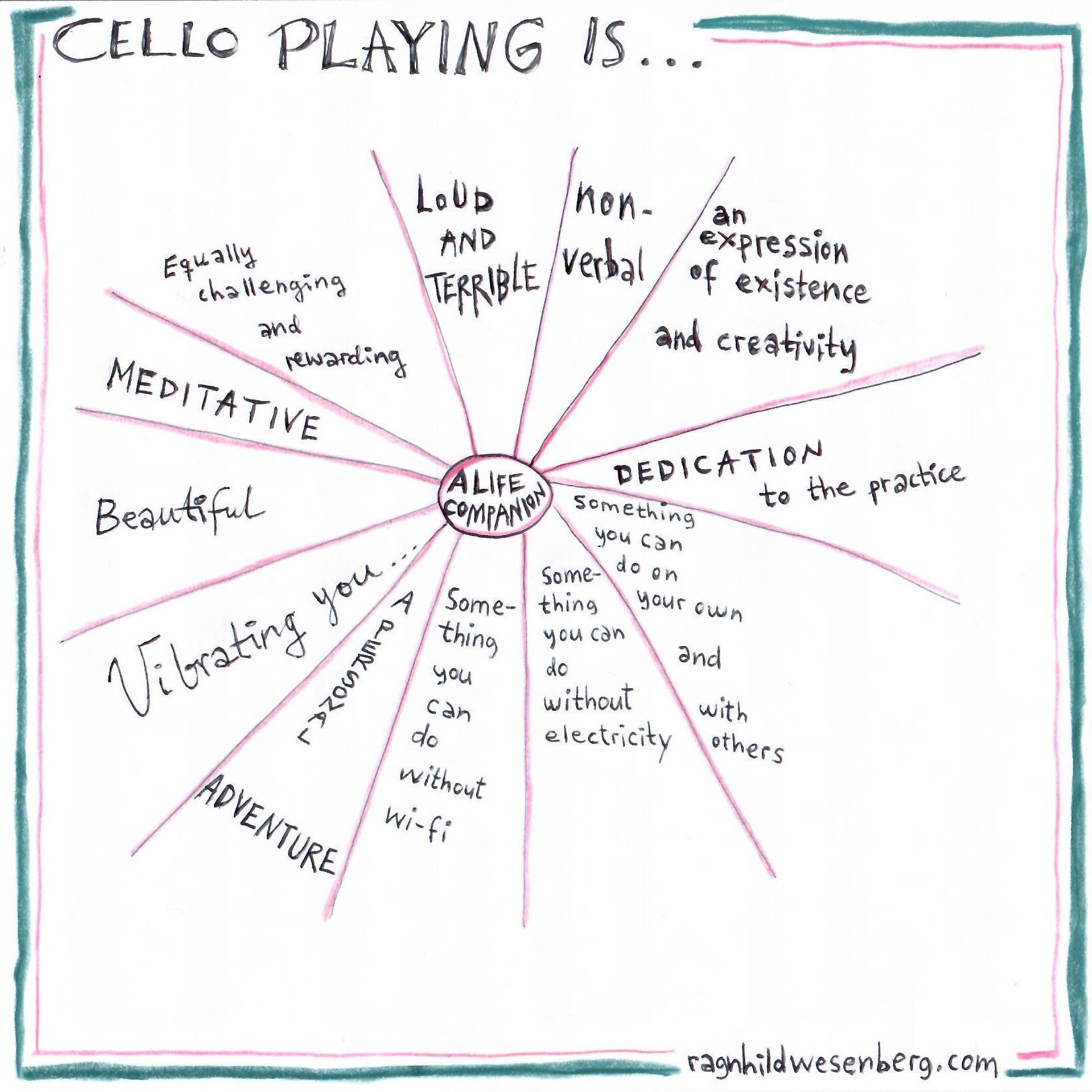
For me, cello playing lands in the category of taking care of my health. It’s not just an enjoyable pastime; it’s an aspect of maintaining a healthy life. Cello playing is a place that allows me
to not exist in language
to be present
to be content
to breathe
to appreciate beauty
to be creative
to go ever deeper into the challenges that this skill presents
to be affected by sounds, elicit feelings and associations
to learn at my own pace
to be in solitude for a little while
to bond with others through music making
to be guided by inspiration
…basically, the opposites of stress factors. Note that I’m not talking about finding peace of mind by executing a challenging piece of music after decades of learning, no, I’m talking about the act of cello practice itself. You don’t have to be a guru in order to find yoga practice to be profound for yourself, or an athlete in order to feel replenished from a mountain hike. And you don’t need to know much about cello playing for it to be all those things on the list above.
Do you enjoy 5 minutes of basic technique? I sure do. I turn on the metronome and find great satisfaction in Christopher Bunting’s bowing exercises on open strings. Or a slow scale. Or a free improvisation. I never regret it. It’s always worth it.
-with ♥ from a process-oriented cellist.
What would you add to the list?