What to look for when buying a cello?
Most of my students are wondering if they should buy a cello instead of renting, or if they should buy a better cello than the one they currently have.
Before I say more about that, I’ll say this:
The biggest difference you’ll experience in your playing comes from you, not your instrument.
And then I’ll say this:
It is immensely inspiring to have an instrument that you like.
Putting those two together, it goes something like this:
I hope that you have a cello that you are happy with and that you feel can grow together with you.
Ok, moving on to the topic of this article.
If you are looking at a cello someone is selling, there are several things you can look out for.
Does it have all its components? Finetuners, a bridge, a soundpost, a tailpiece and an endpin?
You can practice looking for the soundpost with your current cello - take a look inside one of the f-holes and look for a wooden stick that stands between the front and back of the body of the cello. In this photo from inside a cello by Charles Brooks, you can clearly see the soundpost.
The soundpost should be standing straight between the front and back, close to the treble side of the bridge (the left side, if sitting with the cello in front of you). It is significant both for how your cello sounds, and for supporting the weight from the strings.
Therefore, if your soundpost ever falls over (for instance, if the cello falls hard onto the ground), remove the bridge to avoid a damage caused by the lack of support form the soundpost. If the strings are still on, tighten them with the tuning pegs. Also, wrap the tailpiece so that it doesn’t damage the wood.
Is the fingerboard in line with the bridge and the tailpiece? I’ve seen cellos that are not symmetrical… You want the fingerboard to line up with the bridge and the tailpiece.
Cheap cellos might have a purfling that is painted on rather than inserted. The purfling is the pretty, decorative black two lines that follow the shape of your cello around the edge. It’s not just decorative though, it plays a role regarding the health of your instrument, and it’s carefully placed into the wood by the luthier who made the cello. Here is a link to a video on YouTube about that process.
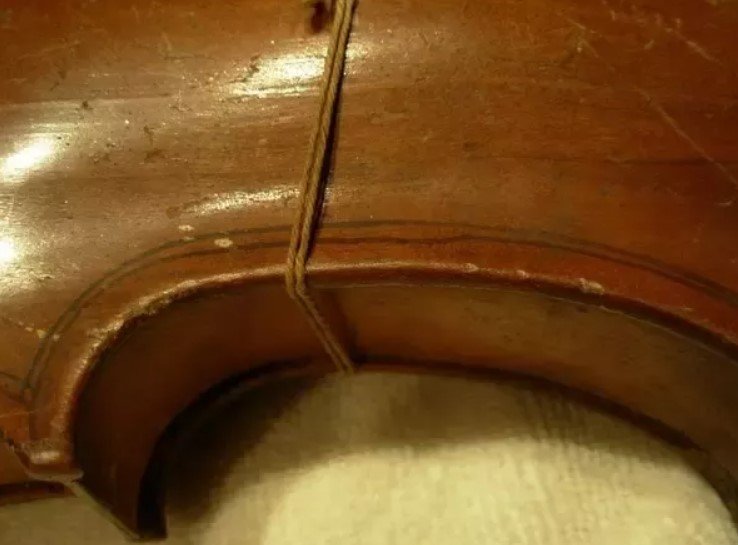
The purfling is painted onto this cello above. The photo was found here.
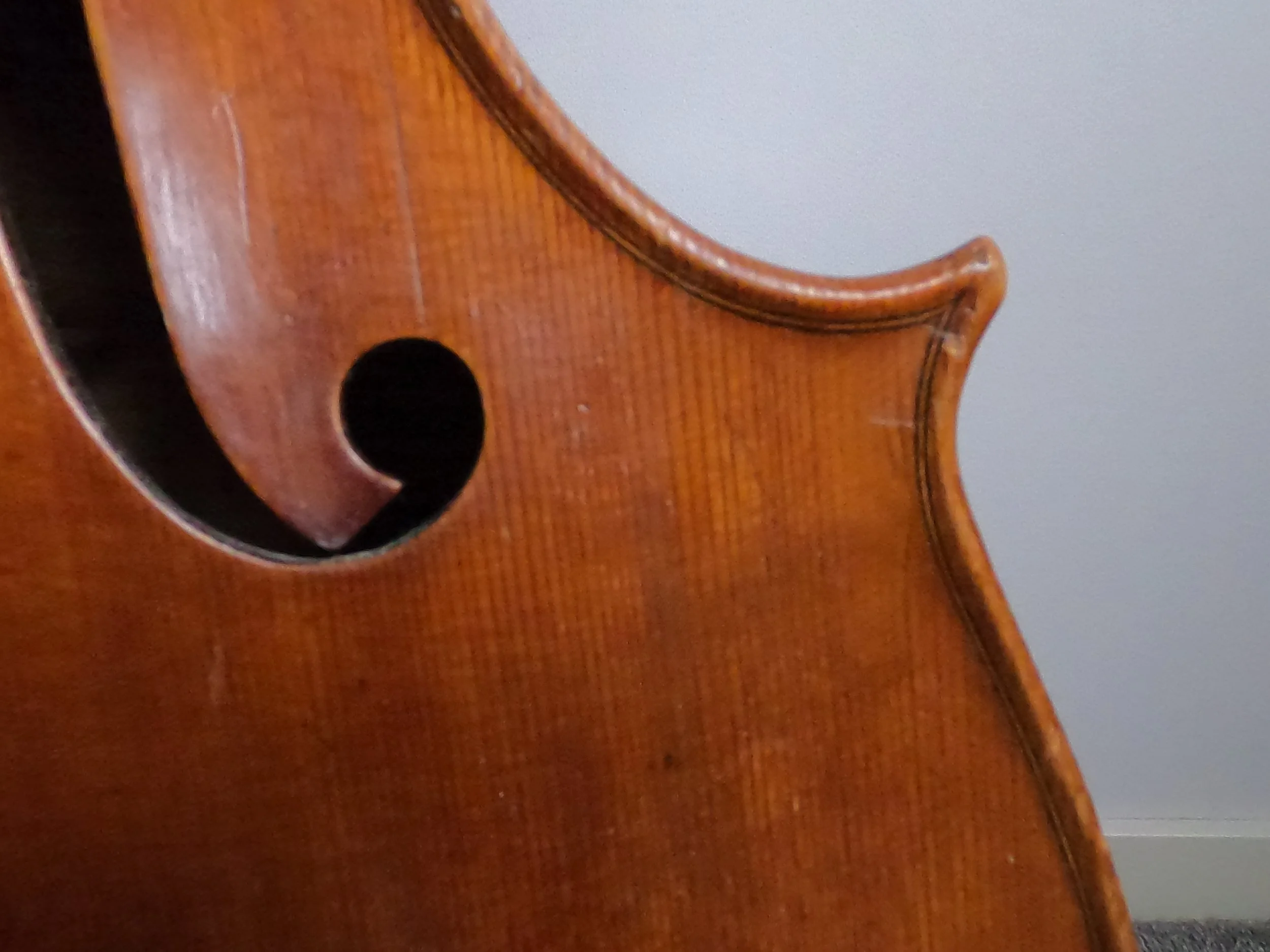
This is a photo of my cello, purfling the way it should be.
4. Cheap cellos might have a fingerboard and tuning pegs that are painted black rather than made from ebony. The tuning pegs, the nut, and the fingerboard support the strings and therefore needs to be made of a material that can handle the force. Ebony is used because it’s a strong material; a tuning peg made of ebony will even sink in water.
To save costs, cheaper instruments might come with other wood types that are painted black to make it look like ebony. Ebony doesn’t shine like a piece of painted wood would do. Sometimes you can spot the paint coming off on the side of the fingerboard, or on the nut where the strings have dug their way through the paint.
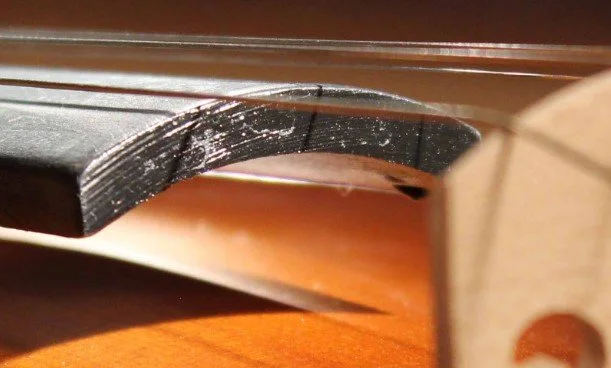
Here the paint is wearing off. The photo was taken from this website.
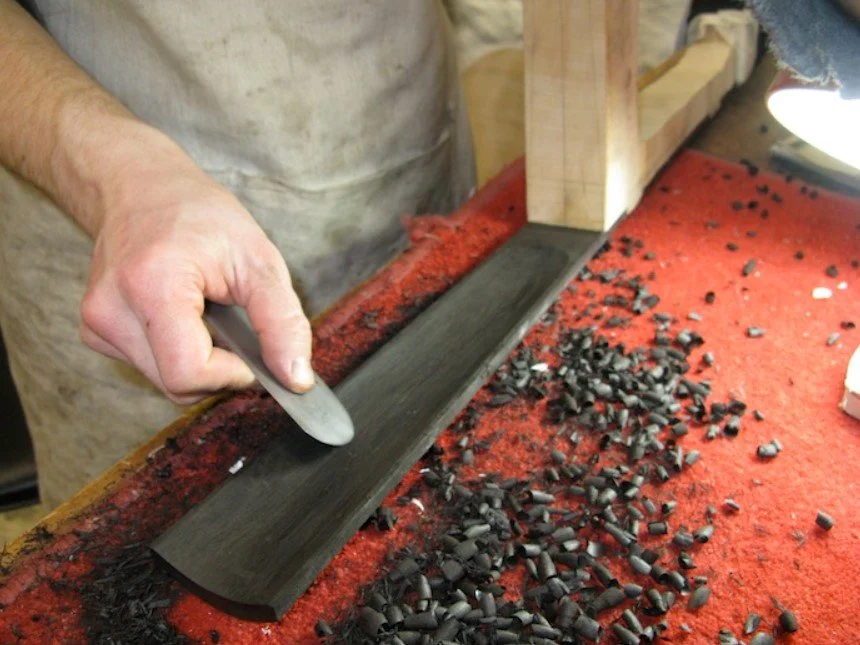
A fingerboard of ebony in the making. Photo found here.
5. If there are cracks on the cello, having them repaired can be an extra expense for you.
6. If the strings have been played on for more than a year, you might want to invest in a set of new strings.
—————
I hope this is helpful - I’ll be updating this as I come across more information.